
A Simple Christmas Planning Timeline: What to Do and When
Christmas can feel as though it arrives all at once. Decorating, gift shopping, wrapping, meals, gatherings, travel, and everyday responsibilities begin competing for the same few weeks. Even joyful plans can become overwhelming when every decision is left until December.
A Christmas planning timeline creates breathing room. It does not require you to plan a perfect holiday months in advance or complete every task on a rigid schedule. It simply gives each decision a place so you do not have to carry all of them in your head at the same time.
The timeline below begins about 10 to 12 weeks before Christmas, around late September or early October. If you are starting later, do not try to catch up by completing several weeks in one day. Begin with your budget, your most important people and plans, and the next task that will make the season easier.
Use this as a flexible guide. Move tasks earlier or later to suit your household, traditions, work schedule, finances, travel, and energy.
Christmas planning timeline at a glance
10–12 Weeks Before Christmas
Choose how you want the season to feel, select a color theme, and review the decorations you already own.
9 Weeks Before Christmas
Set your total Christmas budget and add important events, deadlines, and quiet days to one calendar.
8 Weeks Before Christmas
Make your recipient list, ask thoughtful questions, and begin collecting meaningful gift ideas.
7 Weeks Before Christmas
Research regular prices, establish spending limits, and purchase personalized or likely-to-sell-out gifts early.
6 Weeks Before Christmas
Sort your decorations, test the lights, make repairs, and purchase only the items that fill a genuine gap.
5 Weeks Before Christmas
Confirm gatherings, travel plans, community events, and the general menu for your holiday celebrations.
4 Weeks Before Christmas
Compare seasonal sale prices with your research, finish priority shopping, and begin decorating your home.
3 Weeks Before Christmas
Start wrapping gifts, mail presents and cards, and check that ordered items have arrived correctly.
2 Weeks Before Christmas
Finalize the menu, purchase pantry ingredients, and schedule a few meaningful holiday activities.
1 Week Before Christmas
Purchase fresh ingredients, prepare food where possible, finish wrapping, and clean the spaces you will use.
Christmas Week
Cook, celebrate, include your pets safely, and enjoy the traditions and people you planned the season around.
After Christmas
Record what worked, store decorations carefully, and pass along anything that no longer serves your home.
10–12 weeks before: Decide how you want Christmas to feel
Begin with the atmosphere you want to create rather than a shopping list. Choose a few words for the season: cozy, nostalgic, peaceful, playful, elegant, traditional, or simple. These words can guide your decorating, activities, meals, and spending.
This is also a good time to discuss a color theme. I enjoy having this conversation with my mom. We usually begin by deciding whether the main metallic will be gold or silver, then consider whether we want to pair it with green, blue, red, or a combination we already own.
Our tree has changed with different seasons of our lives:
In 2022, we chose a fresh tree and decorated it in green and red.
In 2023, we were gifted a large pre-lit artificial tree and used green and silver.
In 2024, we reused the same tree and combined red, green, and silver.
In 2025, we decided not to use the large tree because we had realized how much we struggled with its size. Instead of continuing to store something that no longer worked for our home, we sent it to family in the Philippines to enjoy.
Christmas is a wonderfully significant season in the Philippines, so it felt meaningful to know the tree could continue creating memories with our family there. That decision also reminded us that a holiday item can be beautiful and still no longer suit the household that owns it.

Reusing many of the same colors from year to year helped us avoid buying an entirely new collection of decorations every season. A color theme should help you edit and reuse what you have—not convince you to replace everything.
Before purchasing anything, bring out your existing decorations and make three short lists:
What you are excited to use again
What needs repair, replacement, or a new purpose
What can be gifted, donated, sold, or passed along
9 weeks before: Set your budget and master calendar
Choose a total amount you can comfortably spend on the season. Include more than gifts. Your Christmas budget may need room for:
Decorations or replacement lights
Gifts and gift exchanges
Wrapping supplies and postage
Food, baking ingredients, and beverages
Tickets, parking, or transportation for seasonal activities
Travel, hosting, or overnight stays
Charitable giving
A small cushion for forgotten expenses
You do not need to fund every category. If this year is centered on staying home, reusing decorations, and sharing a simple meal, your budget should reflect that rather than someone else’s version of Christmas.
Add known dates to one calendar: work commitments, school events, shipping deadlines, community celebrations, parties, travel days, and the evenings you want to keep unscheduled. Protecting a few quiet days is part of planning too.
8 weeks before: Spend one week listening and gathering gift ideas
Before buying, take a week to think about what the people closest to you would enjoy or genuinely use. I begin with my mom and my partner, and I ask what they might want rather than relying entirely on guesses. The conversation itself often gives me better ideas and prevents me from spending money on something that does not fit them.
You can preserve some surprise by asking for a category, a favorite store, or three possible choices instead of one exact item. Pay attention to everyday conversations as well. Someone may mention a household item that needs replacing, a hobby they want to return to, or an experience they would enjoy.
Record every possibility in one place, but do not purchase everything you write down. This week is for listening and collecting; decisions come next.
If you are using the free gift list from Evergreen & Starlight, add each priority recipient, a comfortable budget, their interests or needs, and two possible gift ideas.
7 weeks before: Research prices and decide what is worth buying early

Once you have a few strong gift ideas, research their regular prices. Write down the current price, the amount you are willing to spend, and any important details such as size, color, shipping time, or return policy.
Sometimes waiting until the weekend after Thanksgiving or Cyber Monday can bring a useful discount. Other times, buying in September or October provides a better price, a fuller selection, and less risk of rush shipping. A sale label alone does not tell you whether something is a good value; knowing the earlier price helps you decide.
Consider purchasing early when an item is personalized, handmade, likely to sell out, difficult to ship, or already within your planned budget. Waiting is most useful when you have compared prices and are comfortable choosing the backup idea if the first one becomes unavailable.
Give each priority gift a decision deadline. This is especially helpful for anyone who tends to overthink and delay purchasing until the price rises.
6 weeks before: Sort decorations and fill only genuine gaps
Now that you have reviewed your decorations and chosen a general color direction, decide what will actually be displayed. You do not need to decorate every room or use every item you own.
Test lights, check ornament hooks, inspect extension cords, and gather the storage containers you will need later. Repair what is reasonable and add only true missing items to your shopping list.
If your theme includes red, green, and silver, for example, shop your own collection first. A different ribbon, arrangement, or combination can make familiar decorations feel fresh without replacing them.
For more guidance, return to “How to Create a Cozy Christmas Home Without Buying All New Décor.”
5 weeks before: Confirm celebrations and discuss the food
Decide which gatherings, community events, religious services, light displays, or quiet traditions matter most to your household. Confirm dates, invitations, transportation, and anything that requires a reservation.
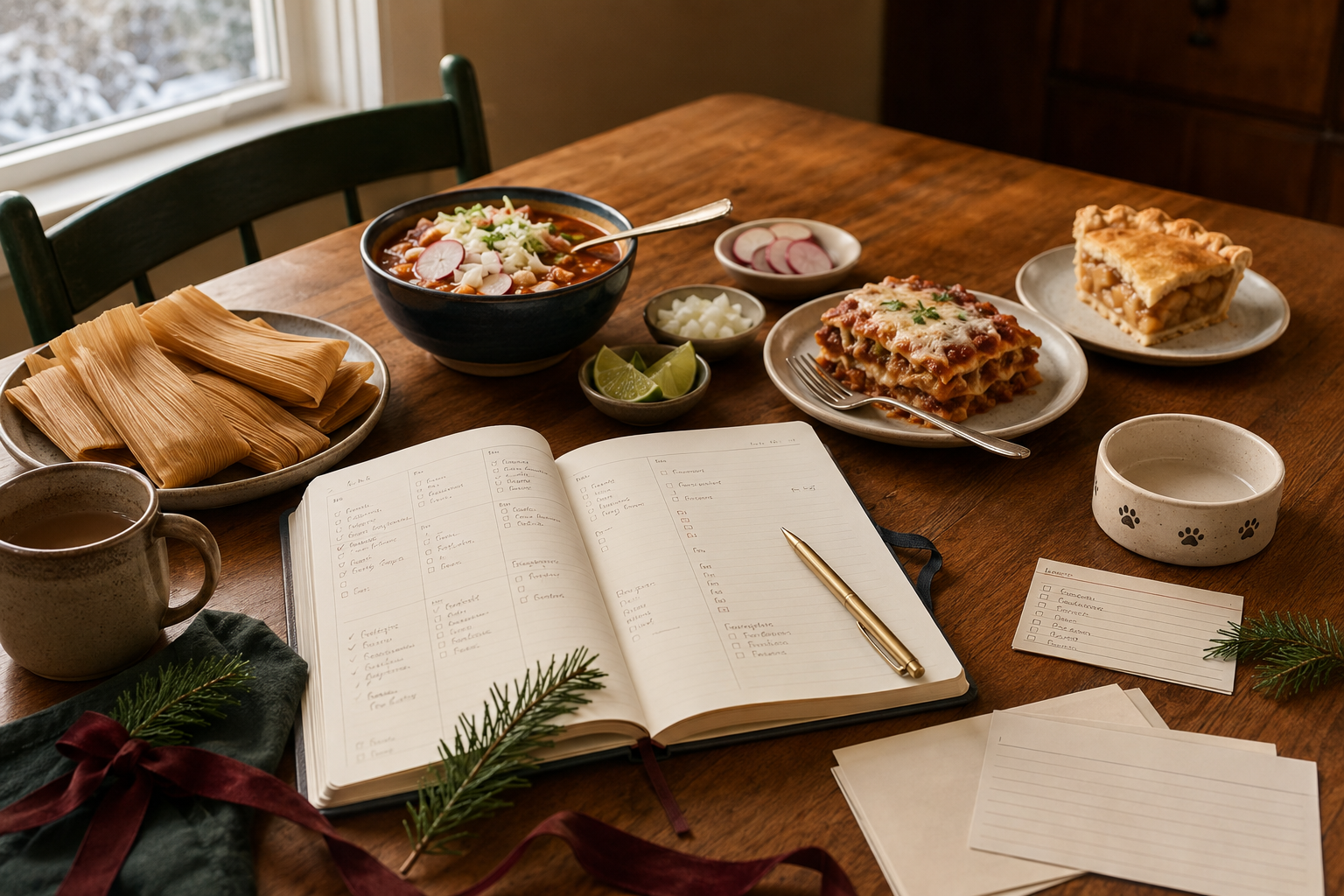
This is also a good week to begin the food conversation. Food preparation is not a huge production in our home, but I love discussing the holiday meal with my mom and partner. My mom enjoys making tamales and pozole. I enjoy lasagna, and my partner enjoys apple pie. Our menu does not need to follow one traditional format; it reflects the foods that make the people in our home happy.
Write down the dishes everyone hopes to have and decide:
Who is preparing each dish
Which ingredients can be purchased early
Which items can be made or frozen ahead
Whether guests are bringing anything
Whether anyone has allergies or dietary needs
What serving dishes, containers, or storage space will be needed
The purpose is not to create the largest menu possible. It is to make sure the favorite foods have a place without leaving one person responsible for everything.
4 weeks before: Shop intentionally and begin decorating
The weekend after Thanksgiving may be a useful time to purchase items you have already researched. Return to your list, compare the actual sale price with the amount you recorded, and buy only if it still fits your plan.
Avoid adding a gift simply because an advertisement created urgency. If the original idea is no longer available or affordable, use the backup choice instead of stretching the budget.
This is also when many households begin decorating or choose a fresh tree. Put on music, prepare a warm drink, and allow decorating to become part of the celebration rather than another deadline.
If you use an artificial tree, assemble it before the day you plan to decorate so you have time to address missing pieces or lights. If you choose a fresh tree, confirm the space and stand measurements before bringing it home.
3 weeks before: Finish priority shopping and begin wrapping

Aim to complete gifts for your priority recipients this week. Check delivery dates and inspect packages as they arrive so problems can be handled before the final days.
Create a simple wrapping station with paper, reusable bags, ribbon, tape, scissors, tags, and a pen. Wrap a few gifts at a time instead of saving everything for one long evening.
Mail gifts and cards that are traveling. Shipping schedules can change, so use the carrier’s current deadline rather than relying on last year’s date.
Keep receipts and update each gift’s status to purchased, arrived, wrapped, or delivered. Then stop shopping for that person unless a genuine problem needs to be solved.
2 weeks before: Finalize the menu and prepare the pantry
Review the menu and turn it into one grocery list organized by pantry, refrigerated, frozen, and last-minute ingredients. Purchase shelf-stable items now if they fit your storage space and budget.
Confirm who will cook, what can be prepared ahead, and when the kitchen will be needed. If several dishes require the oven, write down their temperatures and approximate cooking times before Christmas Day.
Choose one or two seasonal activities for this week, such as looking at neighborhood lights, watching a favorite movie, completing a puzzle, or attending a community event. Leaving room for enjoyment keeps the planning timeline from becoming only a task list.
1 week before: Prepare what you can and release the rest
Buy fresh ingredients and complete any cooking, baking, chopping, or table preparation that can safely be handled ahead of time. Finish wrapping, charge cameras, prepare guest spaces if needed, and check the weather for travel or outdoor plans.
Clean the areas that will actually be used rather than attempting to perfect the entire home. A welcoming entry, comfortable seating area, usable bathroom, and clear kitchen surfaces may matter more than reorganizing a room guests will never enter.
Review the plan and remove anything that no longer feels necessary. The final week is not the time to add several new traditions because they looked beautiful online.
Christmas week: Enjoy the celebration you prepared
Return to the reason you made the timeline: to be present. Follow the plan where it helps, but allow the day to change. A dish may take longer, someone may arrive late, or a quiet morning may feel better than another activity.
In our home, the meal can bring together my mom’s tamales or pozole, the lasagna I enjoy, and the apple pie my partner loves. The dogs also receive a dog-friendly version of a holiday meal so they can be included in a way that is appropriate for them. Because pets have different dietary needs, their portion should be planned separately using ingredients that are safe for them and consistent with any veterinary guidance.
Take a photo, write down one memory, or save a menu from the day. These small records may become more meaningful than documenting every moment.
After the Season: Reflect and Store with Care
There is no universal date for putting Christmas decorations away. In our family, we keep our tree up through Three Kings Day on January 6, a tradition connected to our culture. Other households may pack everything away sooner or continue celebrating longer. Choose the timing that feels right for your household and traditions.
Before moving into the new year, take a few minutes to record what worked well, what felt stressful, what you purchased, and what you would change next Christmas. These notes can make planning next season much easier.
Which tasks felt well timed?
What created unnecessary stress?
Which foods were requested again?
Which decorations did you truly enjoy using?
What remained unused?
What should be purchased earlier—or not purchased at all?
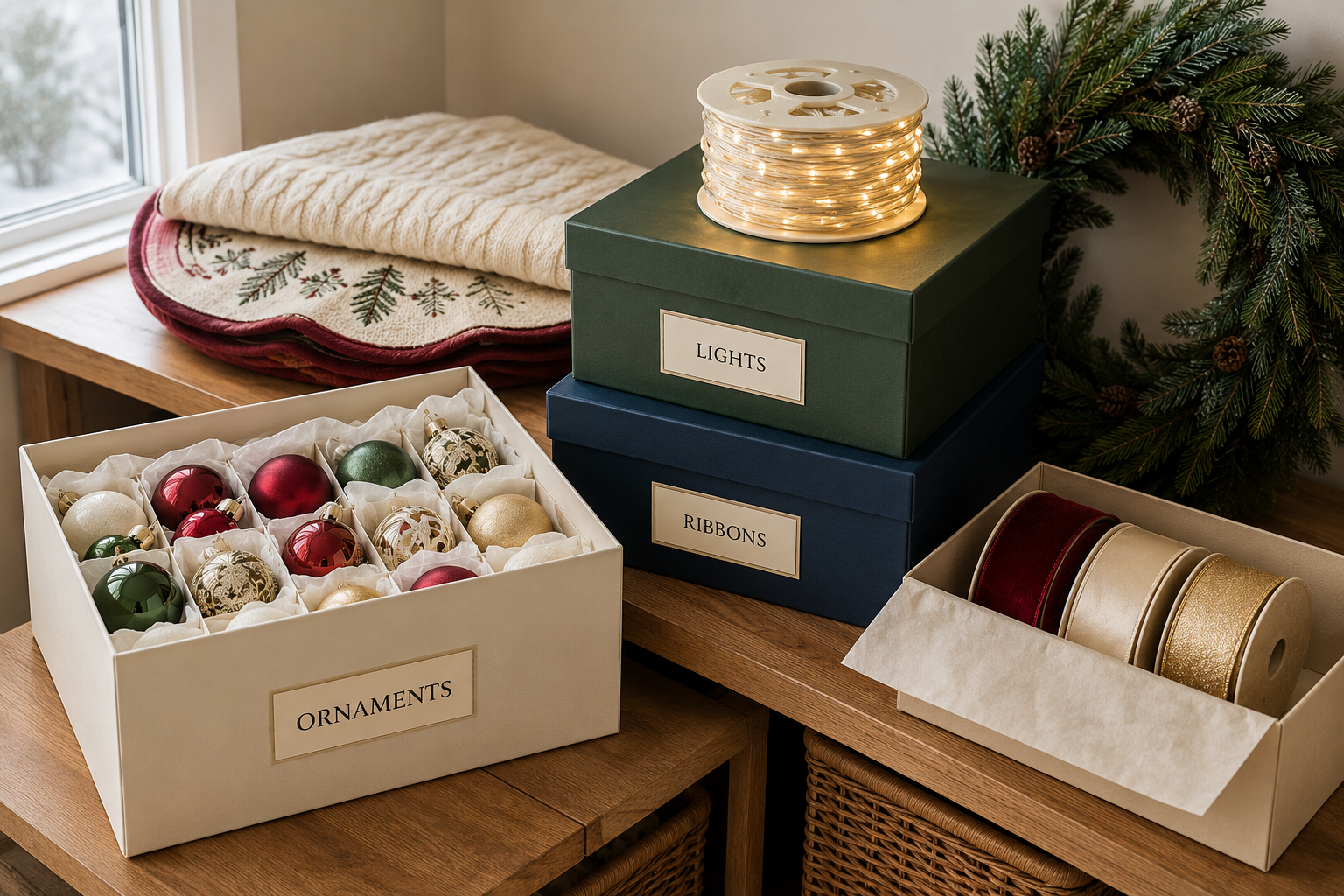
Store decorations by color, room, or type, whichever makes them easiest to find. Label containers clearly and protect delicate pieces. Gift, donate, sell, or pass along items that are still in good condition but no longer serve your home.
Once your household’s celebrations are complete, carefully pack, label, and store your decorations. Note anything that needs replacing, and consider gifting, donating, or selling pieces you no longer plan to use.
Planning should create space—not pressure
A Christmas timeline is not successful because every box was checked on the exact suggested day. It is successful when it helps you make thoughtful decisions before they become urgent.
Choose your colors from what you already own. Give yourself time to listen before purchasing gifts. Research prices so a sale does not make the decision for you. Discuss the foods your household genuinely enjoys, and include traditions that reflect the people and pets who share your home.
When the planning supports the celebration instead of controlling it, there is more room for the conversations, meals, lights, laughter, and quiet moments you hoped to experience.
For help organizing recipients, budgets, and meaningful gift ideas, read “How to Create a Thoughtful Christmas Gift List” from Evergreen & Starlight.
