
How to Create a Cozy Christmas Home Without Buying All New Décor
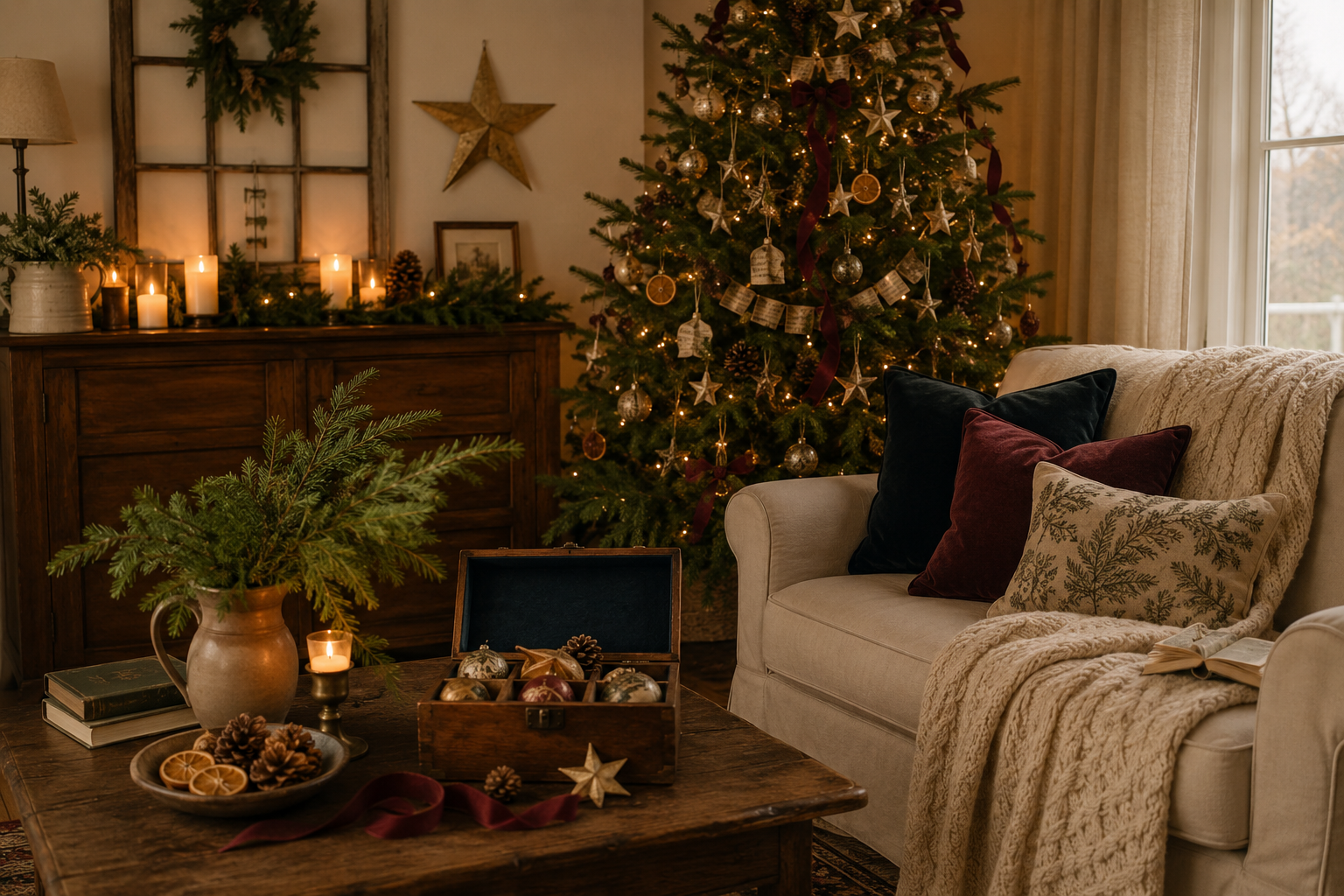
There is something special about the moment a home begins to feel like Christmas. The lights become softer, familiar decorations return to their places, and ordinary evenings suddenly feel a little more meaningful.
It can also be easy to believe that creating this feeling requires an entirely new collection of decorations. Each season brings new colors, trends, ornaments, and perfectly coordinated rooms. Before long, decorating can begin to feel more like a shopping list than a tradition.
But a cozy Christmas home is not created by how much you purchase. It is created through warmth, texture, light, memory, and the thoughtful way you arrange what you already have.
If you want your home to feel festive without starting over or overspending, begin with these simple ideas.
Decide how you want your home to feel
Before opening a storage bin or visiting a store, choose three words that describe the atmosphere you want to create.
You might choose:
Warm, nostalgic, and traditional
Natural, peaceful, and simple
Whimsical, colorful, and joyful
Elegant, soft, and romantic
Cozy, collected, and welcoming
These words become your guide. When you are deciding whether to use an item, move something to another room, or make a new purchase, ask whether it supports the feeling you chose.
This keeps your decorating focused without requiring everything to match perfectly.
Shop your Christmas storage first
Take out the decorations you already own and look at them before deciding that you need something new. Instead of immediately placing each item where it went last year, spread everything out and take a fresh look.
Sort your decorations into a few simple groups:
Items you love and use every year
Sentimental pieces you want to display
Decorations that could work in a different room
Items that need a small repair or refresh
Pieces you no longer enjoy using
You may discover that a familiar wreath feels completely different above a bed, that ornaments can fill a bowl on the dining table, or that ribbon from a previous year can refresh a plain garland.
Moving decorations to new locations is one of the easiest ways to make your home feel updated without buying anything.
Give unused decorations a new home
As you sort through your collection, you may find decorations that no longer suit your home, your style, or the way you celebrate. That does not mean they have lost their value. A piece that has finished its chapter in your home may be exactly what someone else needs to create a meaningful Christmas memory of their own.
Consider offering decorations in good condition to friends or family members who may treasure them. You can also donate them to a thrift store or community organization, or sell them online so they have a better chance of finding the right new home. Before passing anything along, clean it, package fragile pieces carefully, and be honest about its condition.
Sharing is caring, and Christmas décor does not need to remain packed away simply because it no longer serves your space. Giving it another opportunity to be displayed and appreciated allows it to continue fulfilling its purpose—bringing warmth, beauty, and joy to a home during the season.
Build a color palette from what you already own
Your Christmas palette does not need to begin in the holiday aisle. Look at the colors already present in your home.
If your space contains warm neutrals, wood, cream, or tan, you might add evergreen, burgundy, and antique gold. If your home includes cooler colors, silver, navy, soft blue, or white may feel more natural. A colorful home can support brighter ornaments, playful ribbon, and mixed patterns.
Choose two or three main colors and allow the rest to appear as smaller accents. You do not need to remove every decoration that falls outside the palette. Sentimental ornaments and collected pieces are part of what makes a home personal.
The goal is not perfect coordination. It is enough visual consistency to help the rooms feel connected.
Let lighting create the warmth
Lighting often changes the atmosphere of a room more than another decorative object would.
Start by softening the lighting you already have. Turn off harsh overhead lights when possible and rely on table lamps, floor lamps, flameless candles, or strands of warm white lights. A small strand of lights placed along a bookshelf, inside a glass vase, or around a window can bring warmth to an overlooked corner.
You can also reflect light by placing candles or string lights near mirrors, metallic ornaments, or glassware. The gentle glow makes a space feel layered and inviting, especially during early winter evenings.
Even one thoughtfully lit area can help the entire room feel more festive.
Bring in natural seasonal elements
Some of the most beautiful Christmas details come from nature. Evergreen branches, pinecones, dried citrus, bare branches, berries, and winter greenery can add texture without making a room feel crowded.
Use natural elements in simple ways:
Arrange evergreen clippings in a vase
Place pinecones in a bowl you already own
Tie dried orange slices onto ribbon or garland
Add a small branch to a wrapped gift
Lay greenery along the center of the dining table
Fill a basket with logs, blankets, or seasonal branches
If you bring live greenery indoors, protect surfaces from moisture and check it regularly as it dries. Artificial stems can also be reused year after year and mixed with real clippings for a fuller appearance.
Nature adds softness and variation, which helps Christmas décor feel collected rather than overly manufactured.
Focus on a few high-impact areas
You do not need to decorate every room or every available surface. Choose the places that shape how your home feels most often.
For many homes, those areas are:
The front door or entryway
The Christmas tree
The mantel, media console, or main shelf
The coffee or dining table
The kitchen counter
Give these areas your attention first. Once they feel complete, pause before adding more. A few intentional focal points often feel warmer and more polished than decorations scattered across every surface.
This approach also makes decorating—and eventually putting everything away—far more manageable.
Turn everyday items into seasonal décor
Before buying decorative objects, look for practical items that can help create the atmosphere you want.
A folded blanket can introduce your Christmas colors. A cake stand can display ornaments, candles, or a small village. A wooden cutting board can become the base for a kitchen arrangement. Books with coordinating covers can add height to a shelf, while baskets can hold blankets, wrapping paper, or greenery.
You can also temporarily change the artwork inside an existing frame, place ribbon around a vase, or use favorite mugs as part of a cocoa station.
These small shifts allow your home to feel seasonal while still functioning comfortably for everyday life.
Create one handmade detail
A handmade element brings personality to a room in a way a store-bought decoration often cannot.
It does not need to be complicated. You might make paper stars, tie ribbon bows for the tree, dry orange slices, create a simple garland, or write place cards for the dining table. Even a handwritten list of favorite Christmas activities can become part of the décor when placed in a frame.
Choose one project that feels enjoyable rather than turning the season into another demanding to-do list.
The slight imperfections are part of its charm—and part of what makes the finished space feel like your home.
Leave room for the home itself
Cozy does not have to mean crowded. Leaving a little empty space allows special pieces to stand out and keeps your home comfortable throughout the season.
If a tabletop already feels complete, you do not need to add another item. If the tree holds ornaments that carry years of memories, it does not need to look like a showroom display. If decorating an additional room feels exhausting, let that room remain peaceful and simple.
Your Christmas home should support the way you want to live during the season. It should not become something you are afraid to touch, use, or enjoy.
Purchase only what fills a genuine gap
After you have decorated with what you own, step back and notice whether anything is truly missing.
If you decide to buy something, give it a clear purpose. Perhaps you need a strand of lights for a dark corner, ribbon that connects your existing colors, or one larger piece that completes the entryway. A short, specific list helps prevent impulse purchases that may not work once you bring them home.
When possible, choose items that can be reused in different ways or carried into the winter months. Neutral candles, warm blankets, baskets, greenery, and simple metallic accents often have a longer life than highly specific novelty décor.
Buying less does not mean your home will feel less special. It means the pieces you choose have room to matter.
A cozy Christmas home should feel like yours
The most memorable Christmas homes are not necessarily the newest, largest, or most perfectly coordinated. They are the ones that feel welcoming. They hold familiar ornaments, soft light, meaningful details, and space for people to gather and rest.
Begin with what you already have. Move it, layer it, simplify it, and allow it to tell a slightly different story this year.
You may find that the feeling you were hoping to create was never waiting in a store. It was already there—in the traditions, objects, and ordinary corners of home that become special when you give them your attention.
Save this guide for your decorating day, and return to Evergreen & Starlight for more seasonal ideas, thoughtful traditions, and creative ways to make the holidays feel meaningful.
