
The Ultimate Christmas Checklist for a Calm and Organized Season
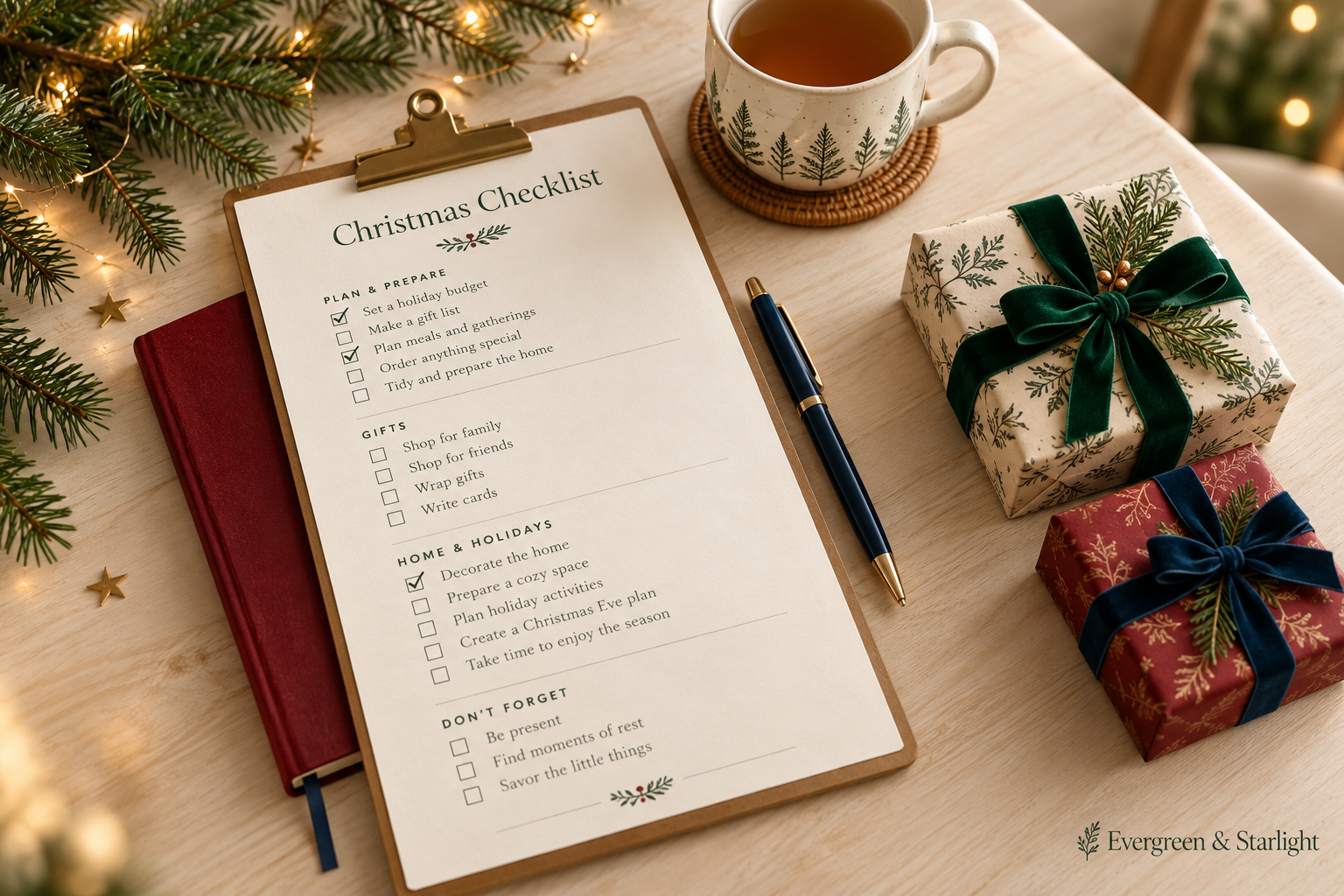
Christmas checklist beside wrapped gifts, evergreen branches, and a cup of tea on a softly lit wooden table.
There is something about Christmas that makes every idea feel like a good idea. Another decoration, another dish for the table, another gift for someone we love. Before long, a season we were excited about starts to feel like a very long list we are afraid of forgetting.
My mom once told me about a friend who tends to buy a little too much during the holidays. She described the decorations as though Christmas had exploded throughout the house, almost like walking through Marshalls or HomeGoods. I can understand the temptation. When you love Christmas, there is always something beautiful calling your name.
But the decorations are only one part of what we carry into the season.
In my Filipino and Mexican family, Christmas is a big thing. Having both backgrounds means there can be plenty of celebrations to think about: family coming to visit, friends joining a gathering, events around town, gifts for everyone, and the question of what to cook and how much. Then there are the children to consider, the dogs, and all the everyday responsibilities that continue through December.
I love this holiday. Still, when all those thoughts pile up at once, I can freeze. I end up doing very little because I cannot figure out where to begin.
What I have learned is to choose what is meaningful to me. A hearty meal with my close loved ones. Gifts that are thoughtful, practical, and chosen with the person in mind. Enough breathing room to actually enjoy being together.
This Christmas checklist starts there. Use it to get the details out of your head, decide what belongs in your season, and take one manageable step at a time.
How to Use Your Christmas Checklist
Read through the checklist once before you start adding tasks to your calendar. Cross out anything that does not apply to your household. Hosting overnight guests, sending cards, and planning activities are all optional.
Next, circle your three biggest priorities. These will help you decide where your time and money should go when plans start competing with each other.
For each task you keep, add a realistic date and, where possible, the name of someone who can help. “Plan Christmas dinner” becomes much easier when you know when you will choose the menu and who is bringing a side dish.
Keep the checklist somewhere easy to find. Once a week, spend ten minutes checking your progress, updating your spending, and choosing the next two or three things to do.
If you are starting late, begin with the essentials for the days ahead. There is no need to catch up on every idea.
1. Choose What Matters Most
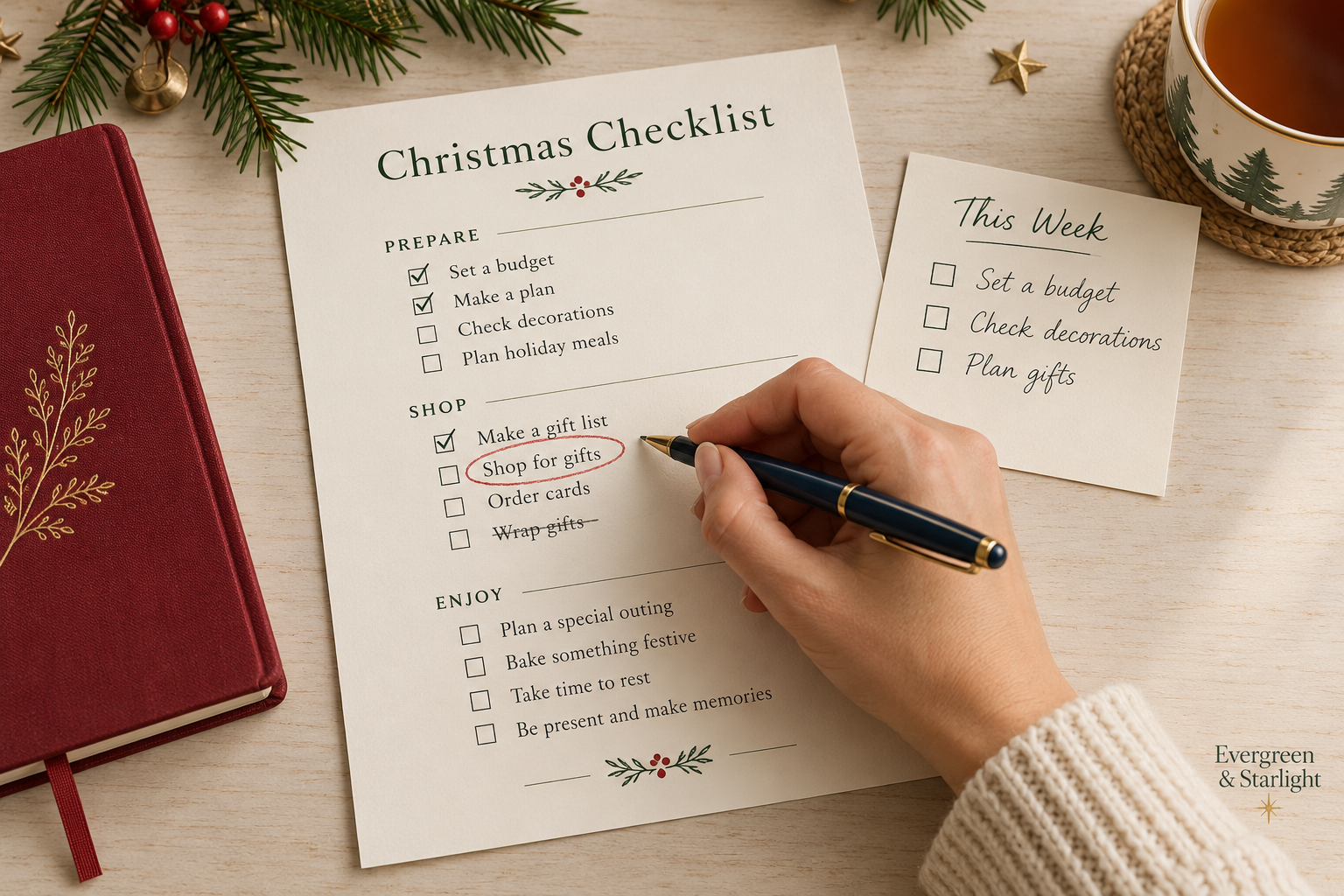
Start here, before shopping or accepting every invitation.
It is easy to plan around what you think Christmas should look like. Give yourself a moment to think about what you actually want to experience.
For me, sharing a hearty meal and choosing meaningful, practical gifts matter more than adding another obligation to the calendar.
Write down three priorities for this Christmas.
Ask your household which traditions they most want to keep.
Choose any new activities you realistically have time for.
Decide what you are comfortable skipping this year.
Leave a few evenings or afternoons free.
Your priorities might be different from mine. The useful part is knowing what they are before the season gets busy.
2. Set a Budget That Leaves Room for January
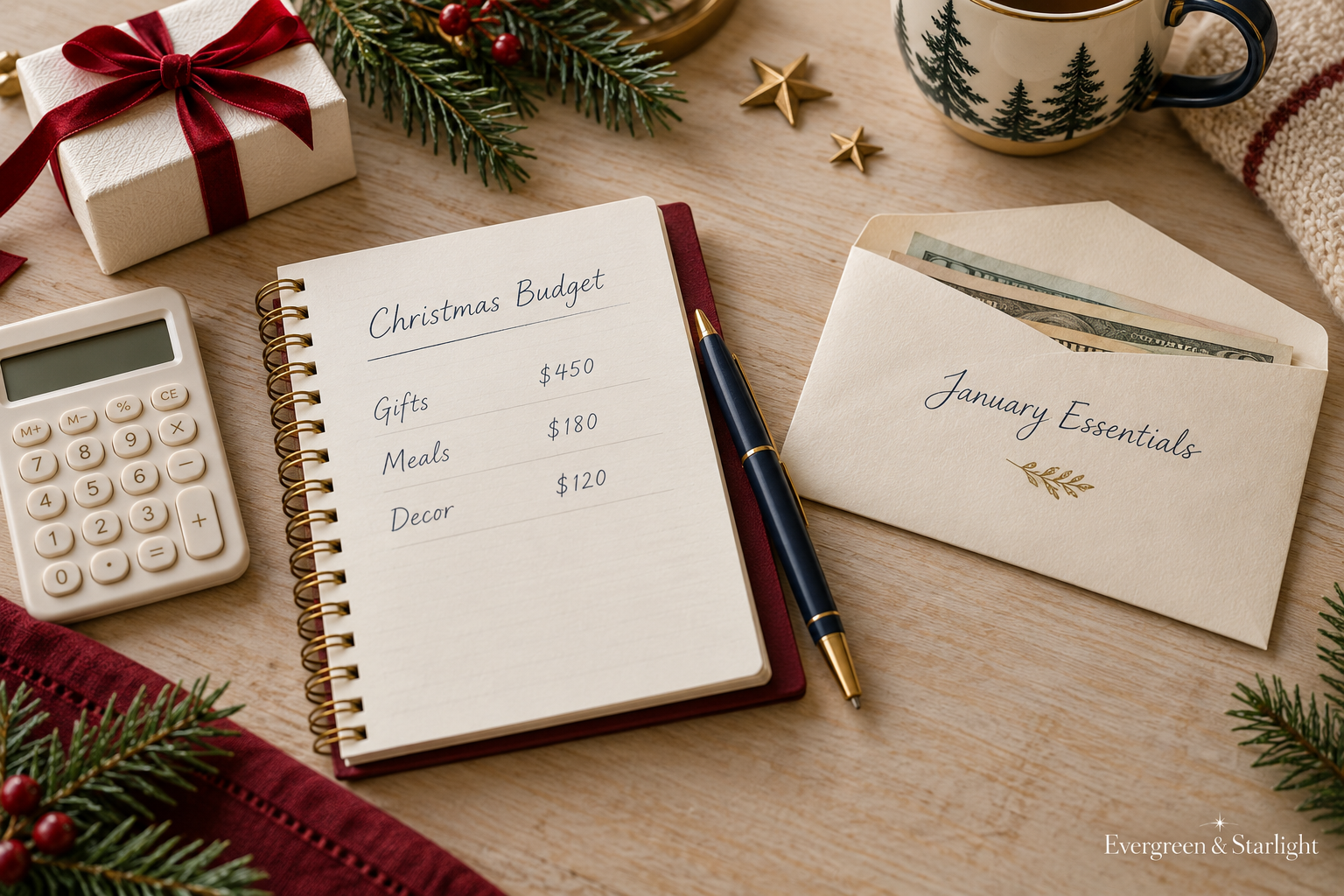
Do this before making holiday purchases.
As a young adult, budgeting for Christmas sometimes terrified me. I wanted to make the season special and make sure everyone was remembered. There were years when I entered January with practically no money left.
That is a stressful way to begin a new year, and it is something I want to be more mindful of.
Before deciding what to spend on Christmas, account for the bills and everyday expenses that will still be waiting afterward. Then choose a holiday spending limit that fits what you have available.
Set one total holiday spending limit.
Divide it among gifts, food, decorations, activities, and travel, if needed.
Include smaller costs such as wrapping supplies, postage, and host gifts.
Leave a little room within your total for unexpected expenses.
Track purchases as you make them.
Check what remains before adding anything else.
If the numbers do not fit, adjust the plans early. A smaller gift list, a shared meal, or reusing decorations can make the season easier to manage.
3. Check What You Already Own
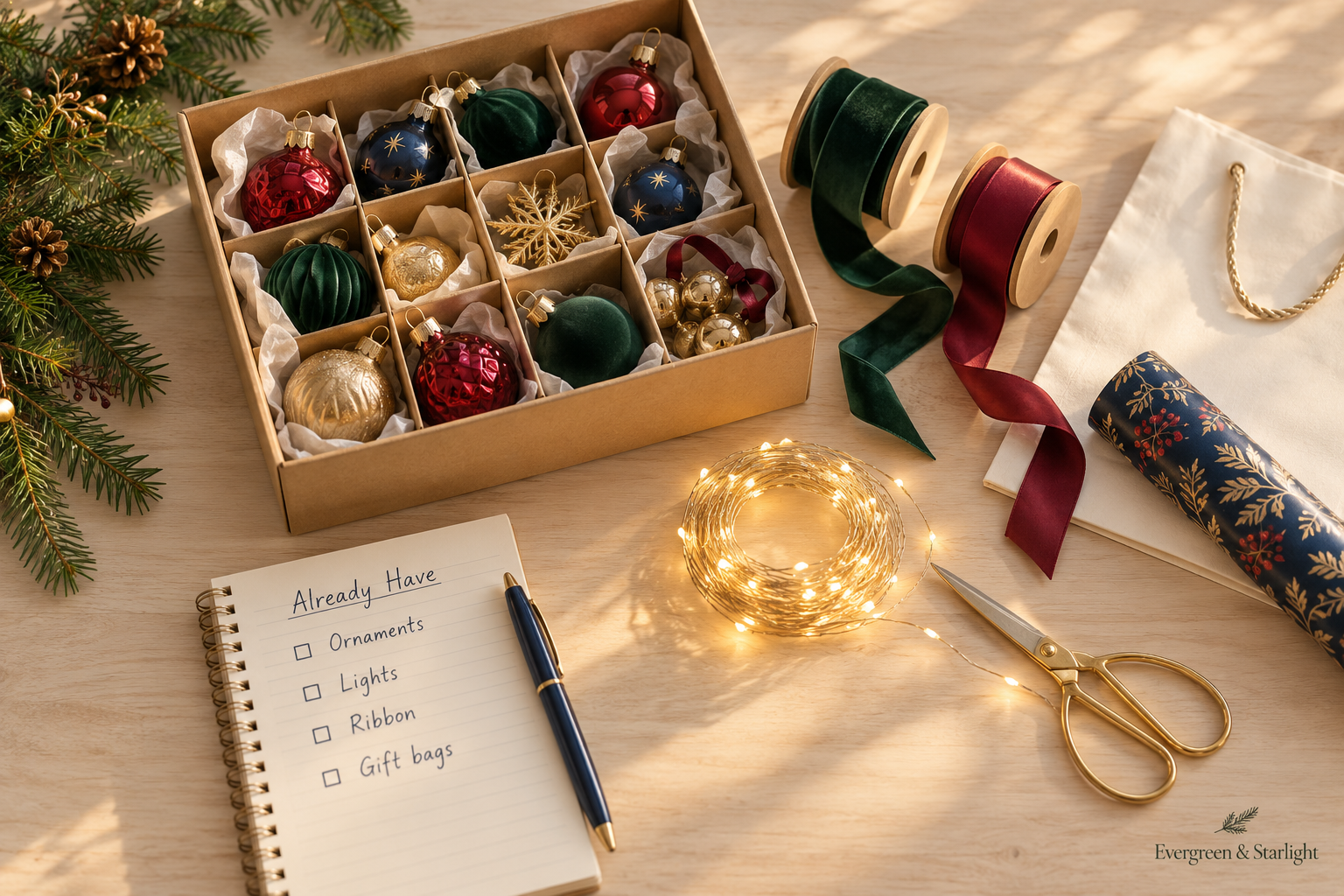
Before browsing the holiday aisles.
My mom’s story about her friend is a reminder of how quickly Christmas purchases can add up. You can love a beautifully decorated home and still pause before bringing more into it.
Take out your decorations and see what you already have.
Check lights before putting them up.
Set aside items that are damaged or no longer used.
Count wrapping paper, gift bags, ribbon, tags, and tape.
Check serving dishes, table linens, and extra seating.
Make a short list of anything you actually need.
A decoration can be lovely without needing to come home with you. If you are considering something new, think about where you will use it, where you will store it, and whether it fits your budget.
4. Put Celebrations on One Calendar
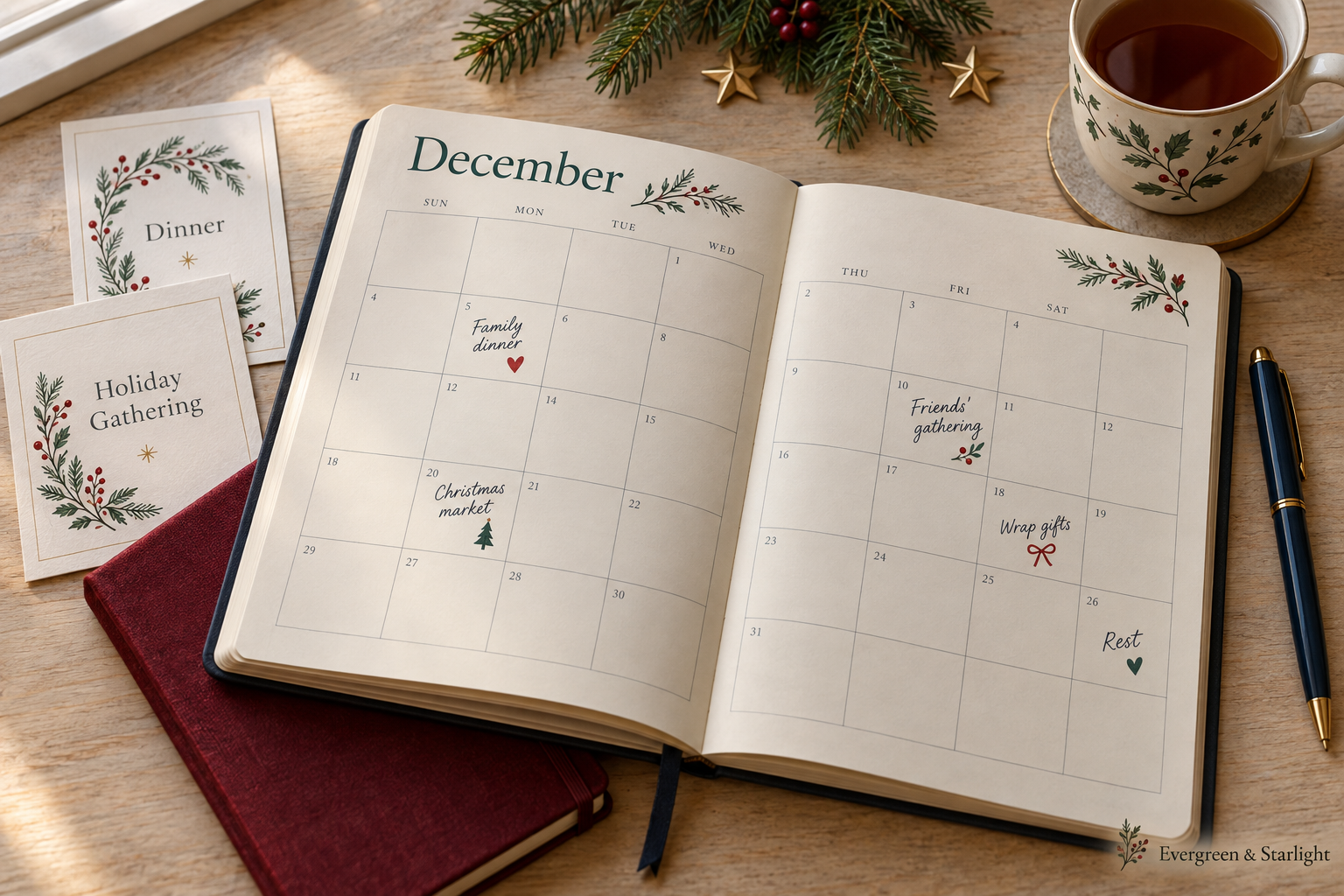
As invitations and family plans begin to arrive.
When you have several gatherings to consider, keeping everything in your head can make the entire month feel full before it even begins.
Add family gatherings, school events, work commitments, and local activities.
Confirm which celebrations you will host or attend.
Note travel time, overnight visits, and any arrangements you need to make.
Ask guests to confirm attendance by a useful date.
Add shopping, cooking, wrapping, and cleaning time.
Keep space between commitments when possible.
Before agreeing to something else, look at the preparation it requires as well as the event itself. A free evening may already be the evening you need for wrapping or resting.
5. Make a Thoughtful Gift Plan
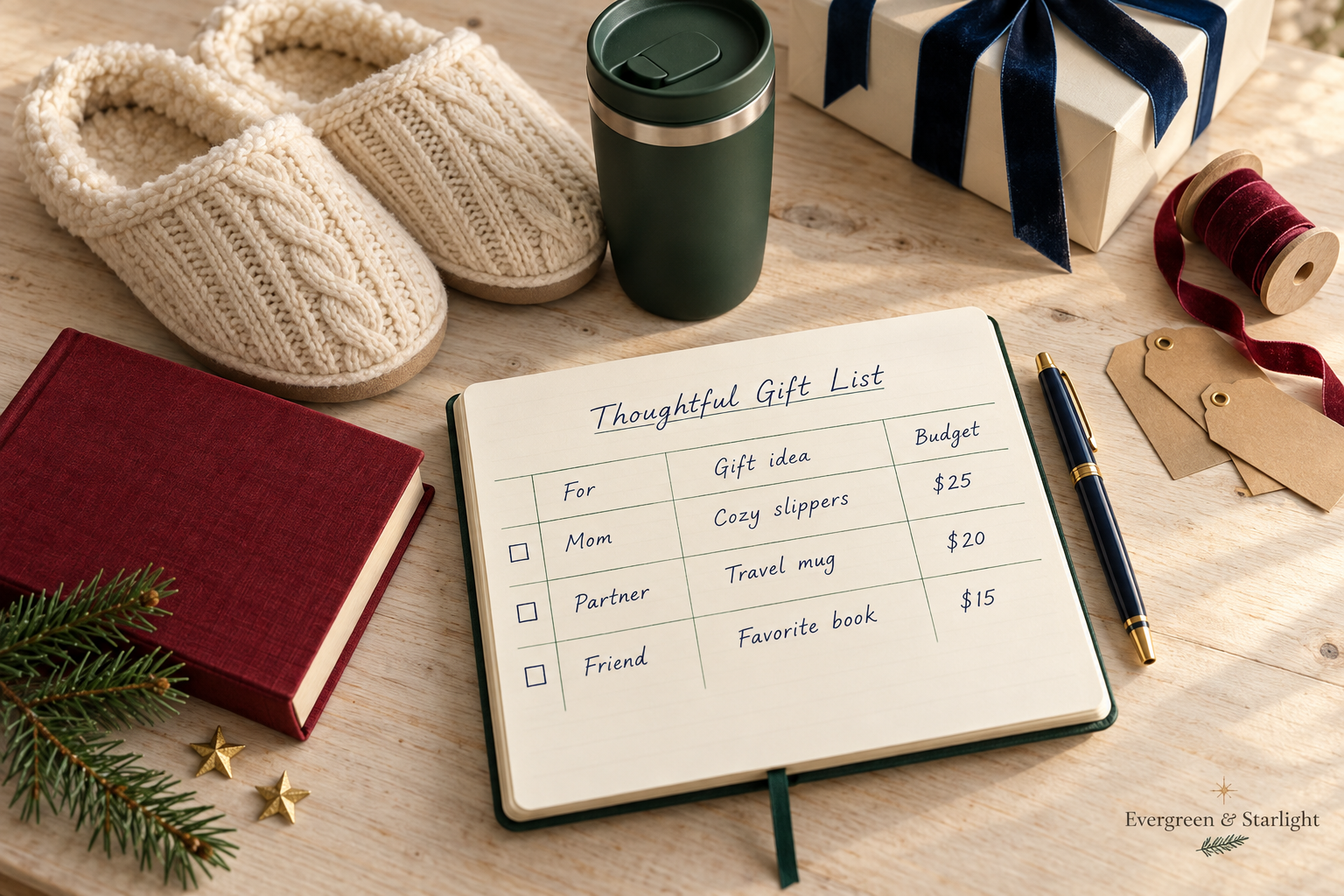
Before shopping, with extra time for anything that needs shipping.
One of the thoughts that can overwhelm me is wondering whether I have remembered everyone. Writing down names helps me see the whole picture.
I also want the gifts I choose to be meaningful and practical. Something a loved one will use and appreciate feels especially worthwhile.
Write one complete recipient list.
Set a spending limit for each person within your gift budget.
Add ideas based on their interests, needs, or everyday routines.
Agree on any gift exchanges or spending limits with others.
Track what you have purchased, received, wrapped, and delivered.
Check current delivery estimates before ordering.
Keep receipts together and note return deadlines.
Plan cards or mailed greetings if you want to send them.
Once you have chosen a gift, let it be enough. Those little extras can quietly become a large part of the budget.
6. Plan the Meal and Share the Work
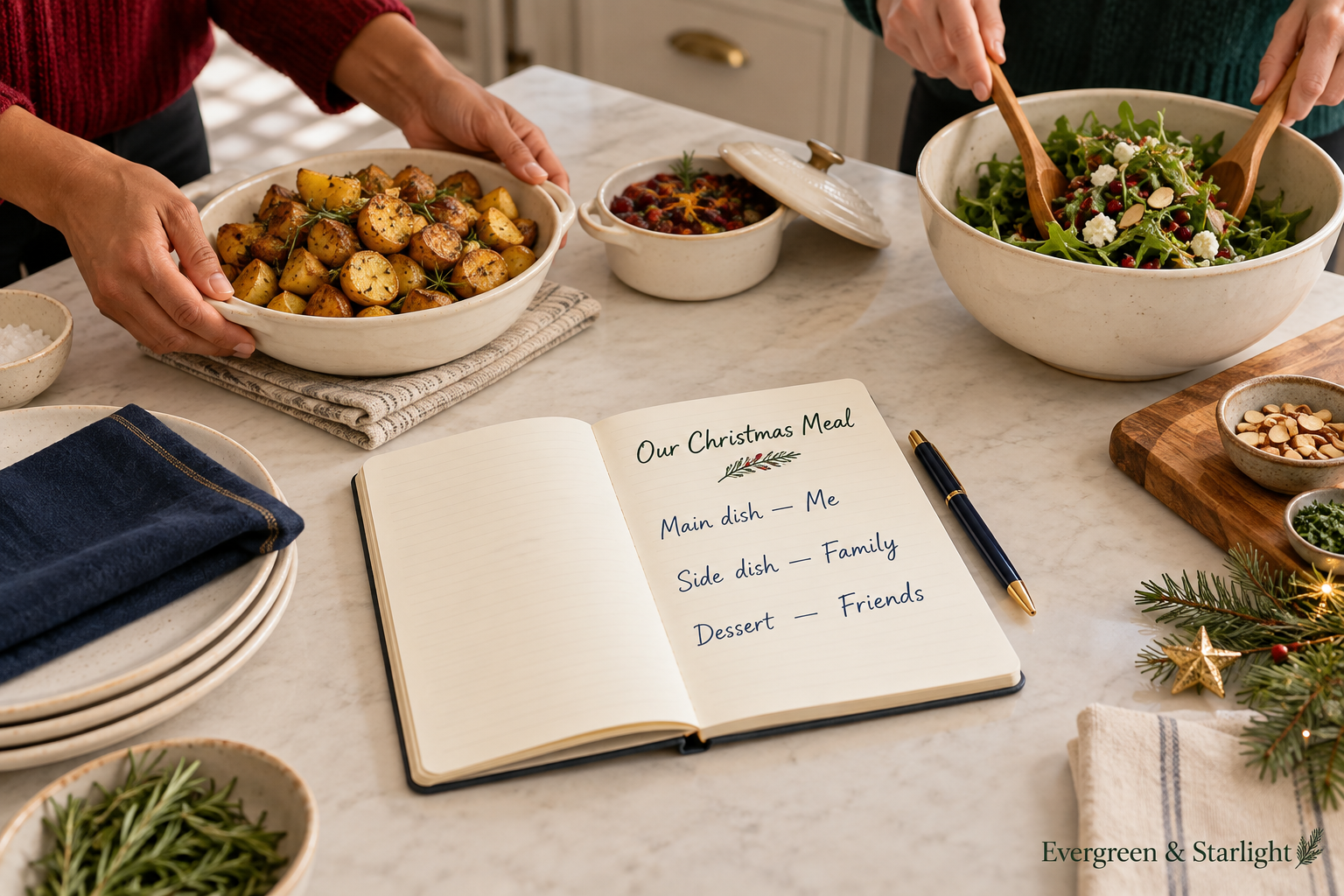
Choose the menu a few weeks ahead, then confirm it closer to the gathering.
A hearty meal with my close loved ones is one of the things I look forward to most. Planning it helps me see how much food, time, and help I actually need.
Confirm how many adults and children you expect.
Ask guests about dietary needs.
Choose a manageable menu and estimate quantities for your guest count.
Decide who will bring which dishes, if you are sharing the meal.
Check the pantry, refrigerator, and freezer before writing a grocery list.
Separate items you can buy early from those you need closer to the day.
Plan cooking times around your oven, stove, and available space.
Check drinks, serving utensils, and containers for leftovers.
It is okay to serve familiar favorites. A meal you can prepare comfortably gives you more time to enjoy the people at your table.
7. Prepare for Guests, Children, and Pets

Review this during the week before your gathering.
The little practical details often make a visit more comfortable. With dogs in the household, I also need to think about how the gathering will fit around them.
Tidy the spaces guests will use most.
Check seating, bathroom supplies, and space for coats or bags.
Prepare bedding and towels for overnight guests, if needed.
Ask visiting parents about anything their children may need.
Set out a simple activity for children, if appropriate.
Plan pet feeding, walks, and a quiet place away from the crowd.
Arrange pet care if you will be away.
Ask someone to help with setup or cleanup.
You do not have to prepare the whole house at once. Start with the spaces that will make the biggest difference to your guests and your household.
8. Finish the Essentials and Enjoy the Day
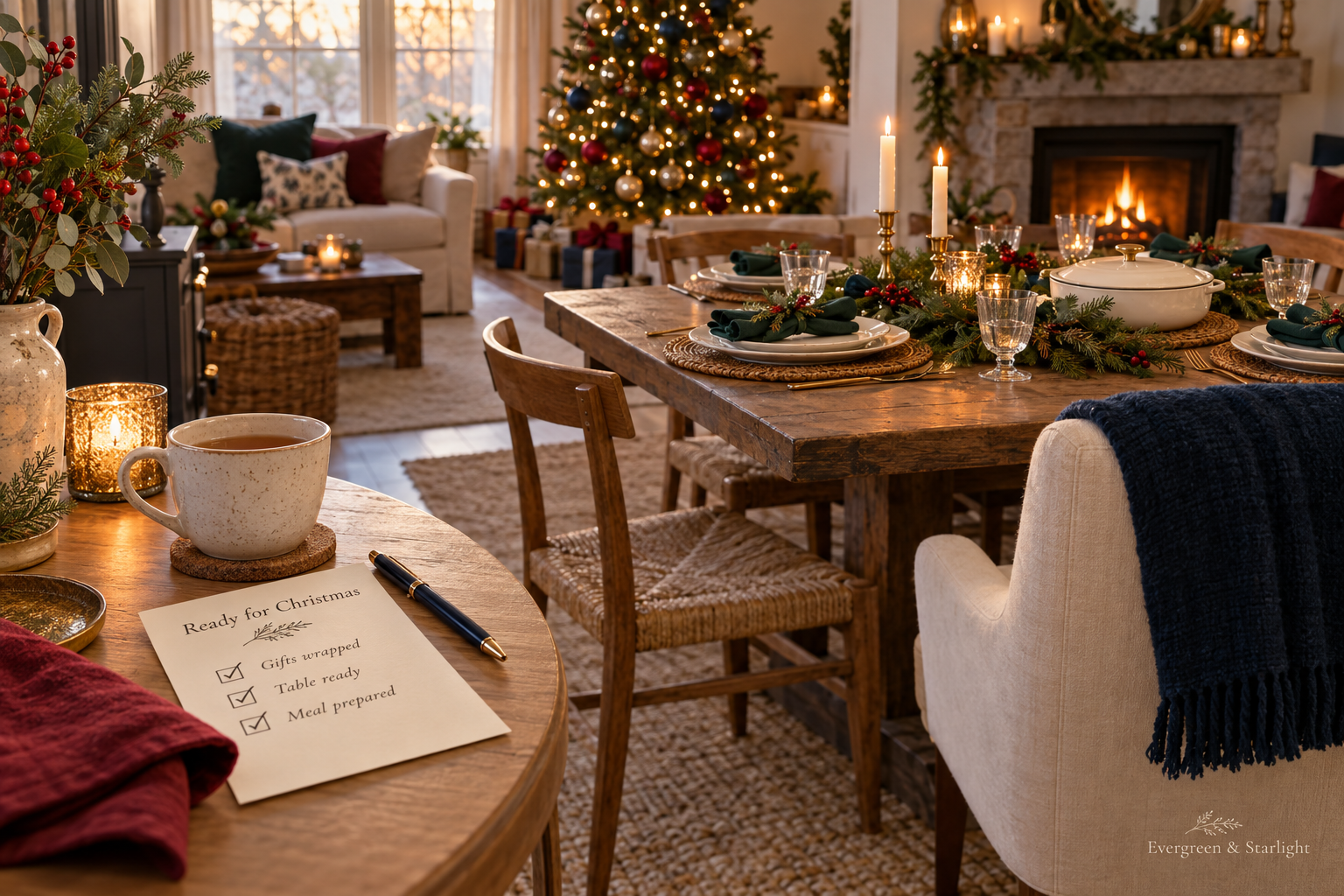
During the final few days.
This is a good time to review what is still on your list and decide what can be simplified.
Confirm arrival times and any dishes guests are bringing.
Finish wrapping and label gifts.
Buy the remaining groceries.
Prepare what you can ahead of time.
Set out serving pieces and check the cooking schedule.
Share the remaining tasks with anyone helping.
Cross off optional extras that no longer fit.
Make time to sit down, eat, and enjoy your company.
If you are feeling overwhelmed, choose one small task: count the plates, write the grocery list, or wrap one gift. A clear next step can help when the whole list feels too big.
9. Make Next Christmas a Little Easier
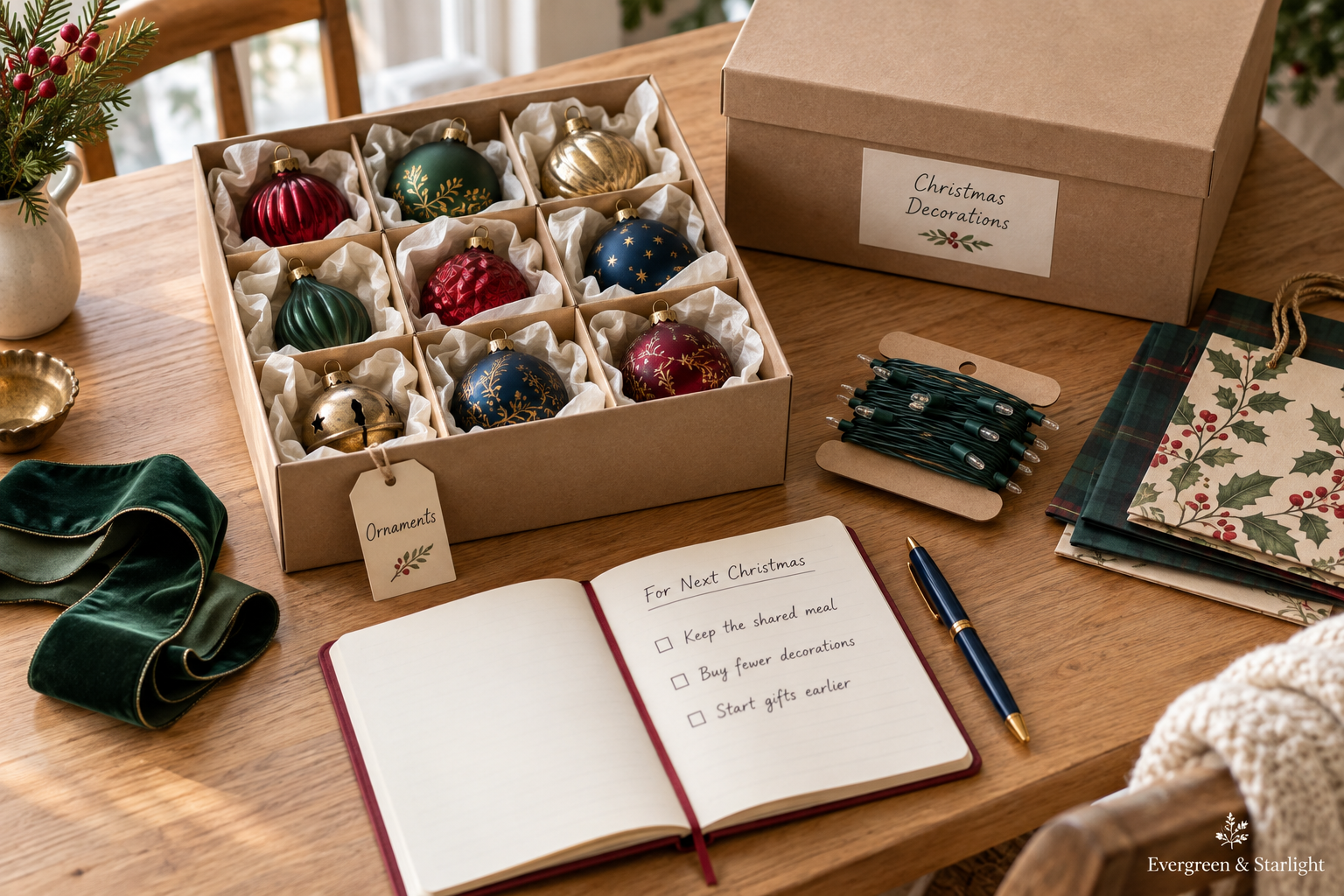
After the celebrations, when you have the energy.
Review your holiday spending.
Handle any returns before their deadlines.
Put away decorations in labeled containers.
Note supplies you will need to replace.
Write down what worked, what felt stressful, and what you want to skip.
Keep your notes with your Christmas checklist for next year.
Be kind to yourself during this part. You are gathering useful information about the season you actually lived.
Keep Your Christmas Checklist Close
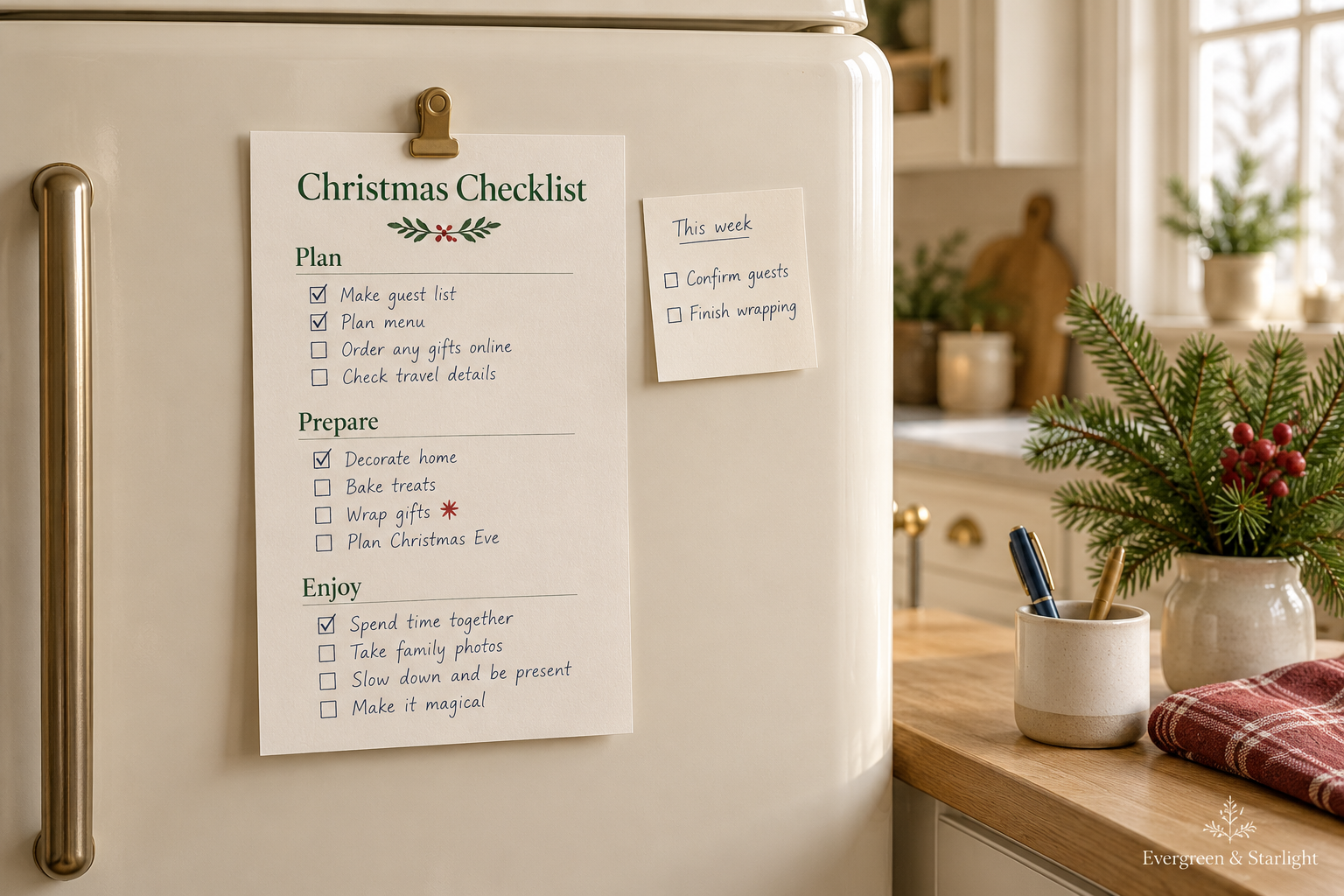
Want a copy to keep with your holiday plans? Download the free Christmas checklist, cross out anything that does not apply, and choose your first few tasks. Keep it on the fridge or with your planning notes so you can return to it throughout the season.
A Christmas You Have Room to Enjoy
I still love the decorations, the gifts, and the excitement of having something to look forward to. I am also learning to notice when that excitement starts turning into pressure.
Choosing what matters helps me find my way back. For me, that means a hearty meal, my close loved ones, and gifts chosen with care. It also means remembering that my life and expenses continue after December.
Let this checklist give you a place to begin. Keep what helps, change what needs changing, and leave room for the moments you were looking forward to in the first place.
What are the three things you most want to make room for this Christmas?
